







Gated Community Security Management: Unified Visitor and Gate Control for Townships
Integrated townships and luxury residential developments require a different approach to gated community security management. A development with 1,000 or more homes may have several vehicle gates, residential towers, clubhouses, retail streets, schools, and commercial buildings within the same perimeter. The volume and variety of movement quickly outgrows the capabilities of a basic society app.
For builders and estate management teams, the challenge extends beyond visitor approvals. Security infrastructure must work across multiple gates and zones, connect with physical barriers, accommodate post-handover operations, and protect resident information. Township security management needs a system built around the estate premises and its physical operations—not simply an app designed for apartment residents.
Why Integrated Townships and Luxury Enclaves Outgrow Consumer Apartment Apps
A consumer apartment app may work well for a smaller residential community with a single gate and a straightforward visitor approval process. The operating environment changes in a township. During peak hours, hundreds of vehicles and visitors may arrive across different gates, while guards must enforce different access rules for residential towers, amenities, and commercial areas. A system that depends heavily on manual approvals creates queues and inconsistent gate enforcement.
There is also a difference in how resident data is handled. Homebuyers in premium developments expect their personal information to remain private and relevant to the services they use. Apps that monetise resident data through third-party advertising or promotional offers may not align with these expectations. Developers and estate teams should avoid society apps built around third-party ads and unrelated consumer engagement.
Unified Access Control Across Residential, Commercial, and Club Zones
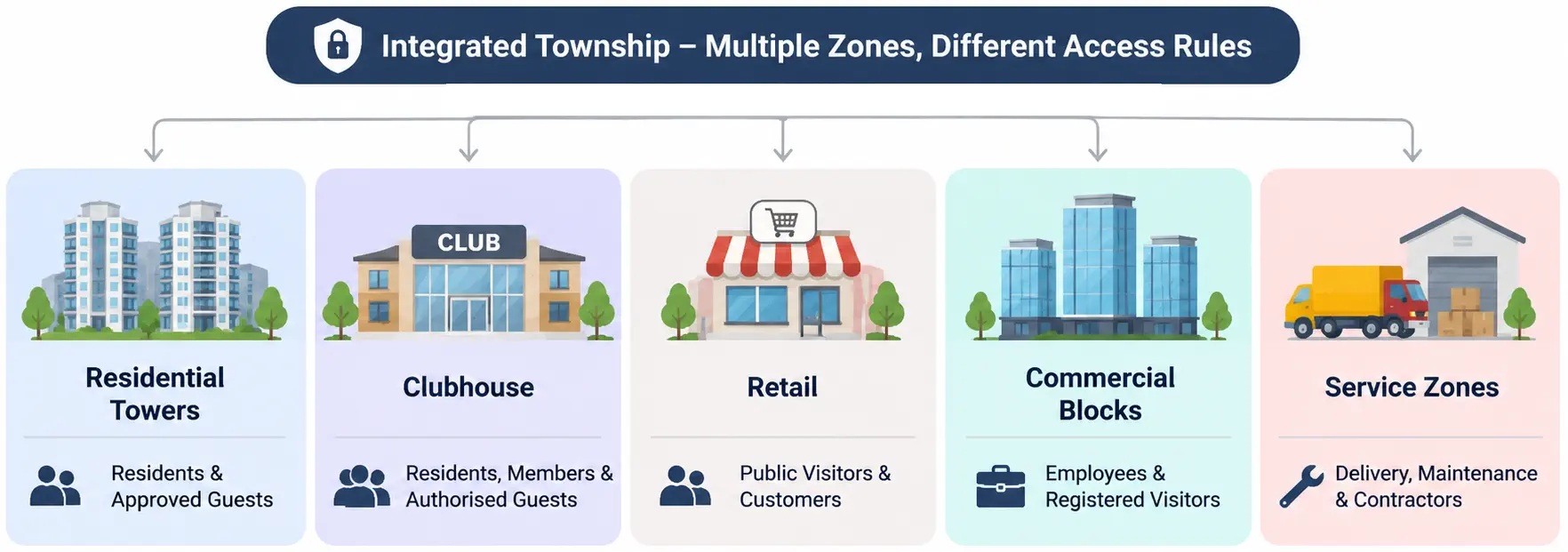
Integrated townships bring residential towers, clubhouses, schools, retail streets, and commercial offices within a single development. Each zone has its own access requirements. Residents may enter their towers and clubhouses, while retail customers should be restricted from residential lobbies and service areas.
Role-based access credentials help enforce these boundaries, such as QR credentials for guests and RFID cards or mobile credentials for residents, staff, and authorised personnel.
This allows residential and commercial zones to follow their own access policies without operating separate security systems for each building. Estate management can enforce these restrictions through a common access control framework across the township.
High-Speed Perimeter Vehicle Gates: ANPR, UHF, RFID, and Visitor Parking Control
Vehicle access becomes a major operational challenge when a township has multiple gates and a large resident vehicle population. Requiring every resident to stop and interact with a guard creates unnecessary congestion at peak hours. UHF RFID windshield tags and Automatic Number Plate Recognition (ANPR) cameras identify registered vehicles as they approach the gate and trigger the boom barrier according to their access permissions.
The same arrangement can be deployed across designated entry and exit gates to support vehicle recognition and movement records. Visitor vehicles, however, need a separate parking policy. A guest may be permitted to enter for a visit but should not occupy a reserved resident space or leave the vehicle parked overnight without authorisation. Automated visitor parking allocation and overstay alerts help estate teams enforce these rules. See how Visitor Parking Management for integrated townships and gated communities supports these requirements.
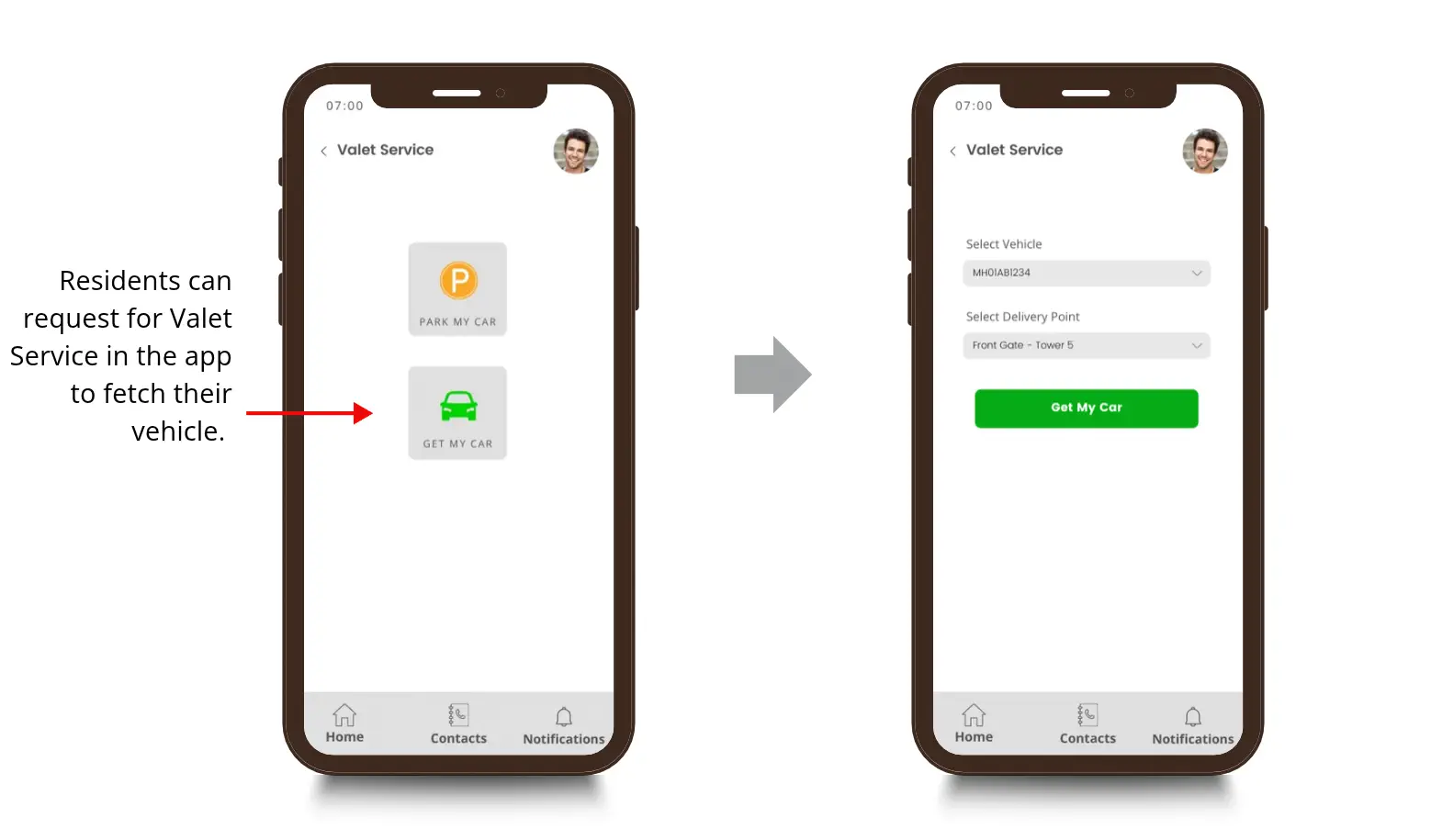
Residential developments can also automate valet parking by linking vehicle entry records with valet operations, parking allocation, and vehicle retrieval. This helps manage resident convenience while maintaining visibility and control over vehicle movement within the property.
Managing Post-Handover Fit-Out Contractors, Domestic Staff, and High-Volume Deliveries
Security operations often become more complicated during phased handovers. Several towers may be occupied while others remain under construction or are undergoing interior fit-outs.
Hundreds of carpenters, electricians, interior contractors, delivery personnel, and domestic workers may enter the estate every day. Their access requirements differ from those of residents and regular employees.
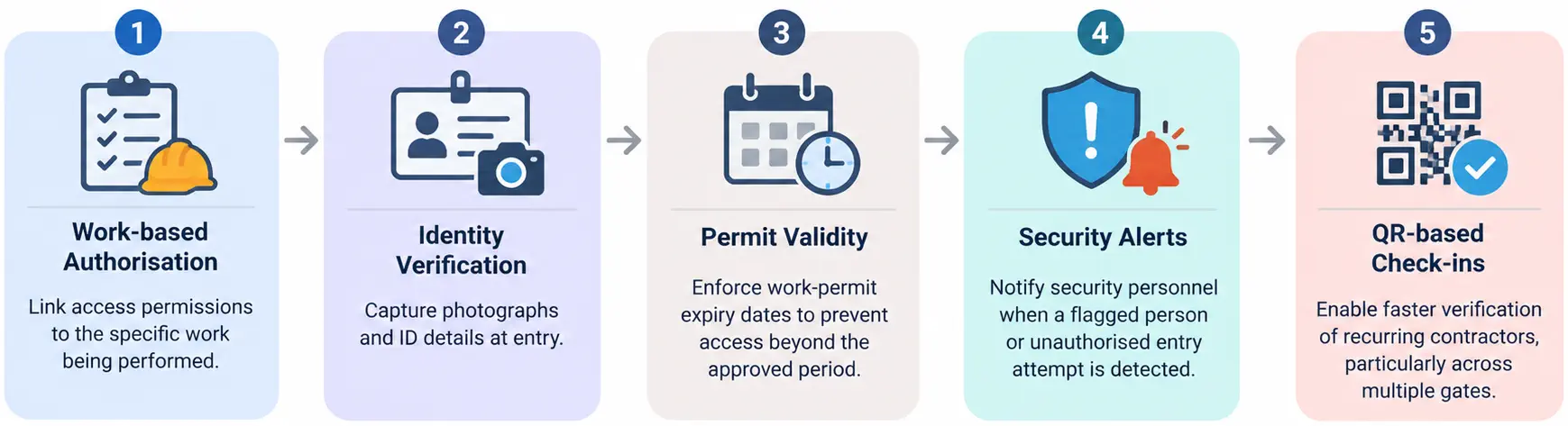
Contractor access should be governed by the nature of the work and the approved duration of entry:
- Work-based authorisation: Link access permissions to the specific work being performed.
- Identity verification: Capture photographs and ID details at entry.
- Permit validity: Enforce work-permit expiry dates to prevent access beyond the approved period.
- Security alerts: Notify security personnel when a flagged person or unauthorised entry attempt is detected.
- QR-based check-ins: Enable faster verification of recurring contractors, particularly across multiple gates.
Access permissions should therefore be reviewed whenever responsibilities change, a project phase ends, or a contractor's scope of work is completed. Retaining old credentials or approvals can leave access open beyond its intended purpose. Security management must account for these transitions, not just verify entry at the gate.
Delivery riders present another challenge because their visits are brief but frequent. Guards need to verify the destination and obtain permission without allowing unrestricted entry. OTP-less Visitor Authentication provides a relevant approach for reducing repetitive verification steps at busy gates.
Centralised Multi-Gate Command Centres and Guard Patrol Accountability
A township with several towers and entry points cannot be supervised effectively by relying only on individual gate registers. Estate teams and facility management partners need a central view of activity across the property. Whether the development is managed by an in-house team or an enterprise FM partner, supervisors need to review gate activity without having to visit each location to collect reports.
A central command dashboard provides visibility into gate activity and recorded occupancy across multiple entry points.
Guard tour tracking adds accountability beyond the gates. NFC or QR checkpoints placed along perimeter walls, basement access points, and other vulnerable areas record patrol completion. Guards submit incident reports with timestamps and photographs, while supervisors review missed checkpoints or pending incidents. Digital records also replace paper guard books that are difficult to verify across shifts. Read more about Digital Registers for Businesses.
Ad-Free Data Governance and Resident Privacy Under the DPDP Act
Premium residential developments sell more than homes. They sell privacy, exclusivity, and confidence in the environment residents choose to live in. An app that exposes flat numbers or phone numbers at the gate creates an avoidable privacy concern. Residents may also question why personal information collected for visitor approvals is being used for unrelated marketing or third-party promotional offers.
Security infrastructure should collect information relevant to its purpose and restrict access to that information. Resident details should not be openly displayed at security desks or exposed through unnecessary access permissions. Digital visitor records should have defined access controls and retention practices. These measures help societies and developers address their obligations under India's Digital Personal Data Protection Act (DPDP Act) and build greater confidence in how resident information is handled.
For builders, this is particularly relevant at handover. The security platform becomes part of the estate's operational infrastructure and influences how residents perceive the developer long after possession. A system built around physical security, controlled data access, and clear accountability is better suited to that responsibility.
Township Security Management with VersionX
A large residential estate is a connected physical environment. Managing it through separate applications or isolated systems and hardware creates fragmented records and makes oversight harder for the estate team.
VersionX provides a unified Physical Operations Platform for managing visitor approvals, access control, vehicle barriers, parking, contractor entry, and guard patrols. It supports hardware integrations and configurable workflows across the estate, allowing residential and commercial zones to operate under their respective access policies while giving management a common view of security operations.
Building or managing an integrated township?
See how VersionX can unify physical security and gate operations across your development.