






Integrated Security Systems: Why Modern Businesses Need a Unified Platform
Modern physical security systems involve more than managing who enters a building. It includes visitor management, physical access control, turnstiles, vehicle and ANPR gates, contractor governance, material tracking, and multiple other operations and processes. An integrated security system brings these functions together on a unified platform. This allows businesses to not only manage security within a common system but also provides better visibility across facilities, simplifies coordination, and strengthens control over daily security operations.
The Hidden Cost of Disconnected Physical Security Systems
When each security function operates on a separate system, managing an enterprise facility becomes harder. Reception may use a visitor management tablet, basement security may rely on a separate ANPR and parking tool, contractors may sign paper registers, and guards may maintain patrol logs. These systems rarely share records. Teams have to verify information manually, enter the same data more than once, and reconcile records during audits.
Data from fragmented systems do not give you the true overall security picture.
The gaps become more serious during security incidents or emergencies. Teams may not have a complete view of who is on the premises, which vehicles have entered, whether contractors have valid permissions, or whether a patrol checkpoint was covered. Disconnected security tools create fragmented audit trails, delay responses, and leave blind spots across facilities. As sites grow, these gaps become harder to manage.
Standalone Security Tools vs. a Unified Physical Security Platform
Standalone security tools manage individual functions, such as visitor entry, employee access, parking, or guard patrols, but operate independently with separate records and workflows. A unified physical security platform brings these functions together, allowing businesses to coordinate security across gates, buildings, and sites, share operational data, and manage access and incidents from a common system.
What a Modern Integrated Security System Unifies
Here are just a few of the processes that a modern security system connects as one system.
a) Visitor and Employee Access Control
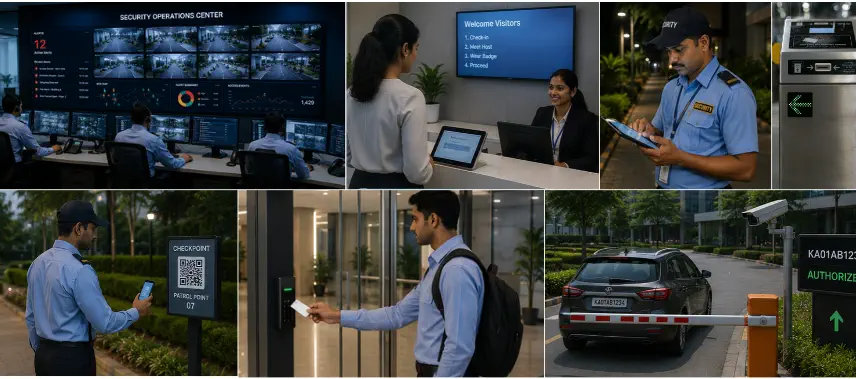
Visitor management processes such as pre-registration, QR-based passes, lobby kiosks, and identity verification integrate with access control such as flap barriers and elevator access.
b) Perimeter Vehicle and Parking Automation
ANPR cameras and UHF RFID tags identify vehicles, automate gate entry, and manage parking access. The system automatically allocates visitor parking bays and coordinates vehicle movement across entry points.
c) Contractor and Vendor Governance
The system tracks contractor credentials, work permits, validity periods, and site access permissions before allowing entry. It manages ID OCR capture, loading-bay schedules, and contractor movement to ensure access follows approved requirements.
d) Guard Patrol Accountability
The system tracks guard patrols using NFC or QR checkpoints and records patrol completion with timestamps.
e) Centralized Multi-Site Command and Evacuation Roll Calls
It helps security teams monitor occupancy, access events, and security activity across multiple gates, towers, buildings, or plants from a central console.
Hardware-Agnostic Integration with Existing Turnstiles, Barriers and Directories
Integrating a modern physical security does not require replacing existing infrastructure. VersionX solutions work with installed flap barriers, optical turnstiles, boom barriers, access readers, and other security hardware.
Businesses can retain their existing equipment while bringing their security workflows onto VersionX’s unified platform.
The platform connects with existing hardware through compatible controllers and integration protocols, and with business systems such as Active Directory and HRMS. This allows IT and facility teams to unify security operations without a complete hardware overhaul.
This reduces replacement costs, avoids unnecessary disruption, and gives businesses the flexibility to expand or upgrade infrastructure as requirements change.
DPDP Act Compliance and Role-Based Governance in a Unified System
Disconnected gate applications and paper registers make personal data harder to protect, track, and manage in line with India's DPDP Act.
A unified platform applies consistent privacy controls across every entry point, including PII encryption, role-based permissions, masked guard views, and automated data-retention policies. This reduces unnecessary access to personal information and helps businesses maintain better control over data handling, storage, and deletion.
How Integrated Security Operations Benefit Different Industries
a) Corporate Offices and Multi-Tenant IT Parks
A unified system coordinates employee access, visitor traffic, tenant permissions, parking, and shared building security across multiple floors, buildings, and tenants. Explore how VersionX platform enables multi-tenant IT and corporate parks to standardize their operations in this blog.
b) Manufacturing Plants and Warehouses
The system governs workforce entry, contractor access, vehicle movement, material tracking, and restricted production or storage zones. Explore how VersionX platform helps manufacturing plants improve safety oversight, audit readiness, and entry-exit efficiency through a unified system in this blog.
c) Integrated Townships and Campuses
A unified system manages residents, employees, visitors, vendors, vehicles, and access across multiple gates, buildings, and shared facilities. Read more here. Explore how VersionX platform allows residential and commercial zones to operate under their respective access policies while giving management a common view of security operations.
The Operational Advantage of Integrated Security Systems
Integrated security does more than centralize control. It turns everyday security activity into usable operational data, helping businesses understand movement, identify gaps, and make better decisions across facilities. Benifits of a unified system include:
- Unified visibility: Operational records are consolidated for a clearer picture of facility activity.
- Better decisions: Correlated data helps identify recurring issues, review security performance, and allocate personnel and resources more effectively.
- Faster response: Connected workflows reduce manual verification, delays, and gaps in communication during routine operations and emergencies.
- Stronger accountability:Centralized records, audit trails, and access permissions make it easier to verify actions and enforce security procedures.
VersionX brings these functions together through its Physical Operations Platform, unifying physical security, access, people, vehicles, materials, and operational records within one system.
Replace fragmented security tools with a unified platform built around your existing infrastructure.
See how VersionX can unify security across your facilities. Request a demo.