







Visitor Entry Process: How An Automated Check-In System Eliminates Bottlenecks
Your visitor entry process determines how guests enter, move through, and exit a facility. A well-defined process verifies visitor identity, records entry, notifies the host, and ensures access is limited to authorised areas. A visitor entry management system replaces manual registers and disconnected check-in tools. Coordinated workflows improve security, reduce waiting time, and maintain accurate visitor records.
1. Why Manual Visitor Entry Processes Create Gate Bottlenecks and Security Blind Spots
Manual visitor entry processes often slow down reception during peak morning hours. At corporate offices, multiple guests may arrive between 9 and 10 AM, leaving reception staff to write names, contact details, host information, and visit purpose in paper registers. Other data such as exit details, visitors who are still inside, and those who overstayed are neither recorded nor visible.
Illegible handwriting, repeated data entry, and unverified phone numbers make records unreliable and delay check-ins. Paper registers and basic tablet apps also leave security gaps.
Visitor details remain exposed to others at the reception desk, creating privacy risks under India's DPDP Act. Without identity verification, host confirmation, or access control integration, security teams have limited visibility into who has entered the premises, where they are authorised to go, or whether they have checked out.
2. From Pre-Invite to Check-Out: The Automated Visitor Journey
Let’s discuss how a VMS automates host notifications, digital visitor badges, and exit logs.
An automated visitor entry management process connects guest registration, identity verification, host approval, access credentials, and exit records. The guest entry system workflow must be configurable to suit the facility, visitor type, and security requirements.
a) Pre-Registration and Instant QR Pass
Pre-registration or meeting appointments and invites in the visitor system can be created by either the host, the guest, or the admin. Additionally, the admin can create bulk invites. Visitors get a WhatsApp, SMS, or email invitation with the meeting details, location pin, and a QR pass. Pre-registration allows guests to arrive with their details already recorded, reducing the time spent at reception.
b) Fast Gate Check-In, Identity Verification, and Visitor Authentication
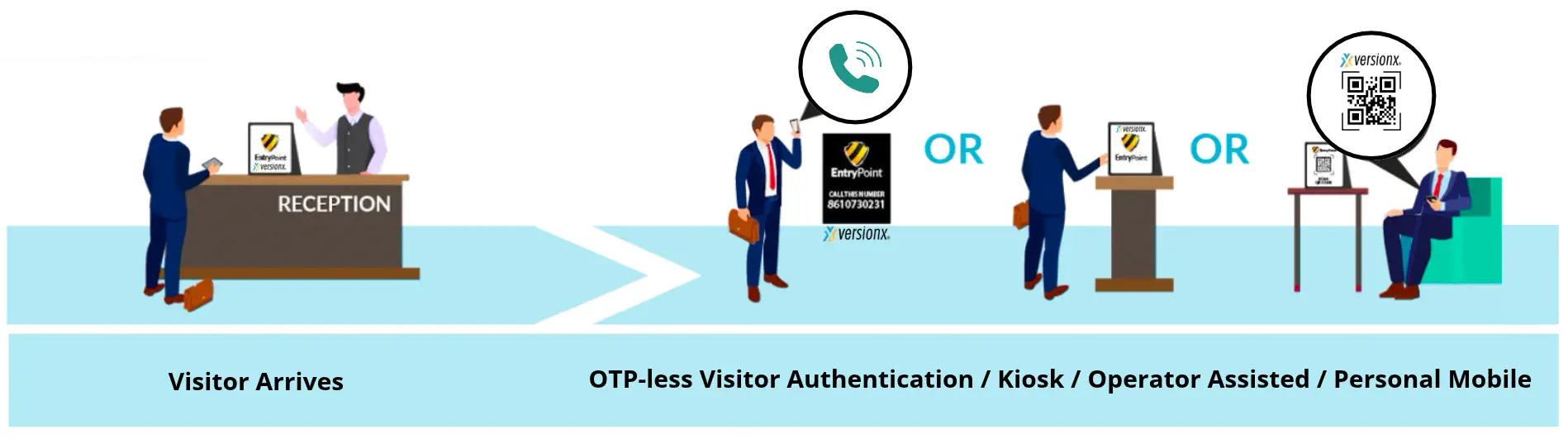
Walk-in visitors register at reception, while pre-invited guests check in by scanning their QR pass. OTP-less visitor authentication offers verification methods without depending on SMS OTPs. Photo capture, ID scanning through OCR, and blacklist/watchlist screenings can be configured to verify visitor identity.
c) Instant Host Notification and Approval
The system automatically notifies the host through WhatsApp, SMS, or email when a visitor arrives. Hosts review the details and approve or reject entry from their phone or desktop, without requiring reception to make repeated calls.
d) Credential Issuance and Physical Access Sync
Once approved, the visitor receives a printed badge or digital QR credential with access permissions for the authorised areas. If the visitor software is integrated with access control, the credential syncs with lobby flap barriers, turnstiles, and elevator access to prevent unauthorized movement. See section 4 below to know more about VMS integrations.
e) Timed Check-Out, Overstay Alerts, and Audit Logs
Visitors check out with a QR scan or another defined exit method, creating an accurate exit timestamp. The system makes it easy for the admin and security teams to track active visitors, receive overstay alerts, review entry and exit logs, and access visitor headcounts during emergency evacuations.
3. Tailoring the Visitor Entry Process for High-Risk and High-Volume Environments
A corporate guest entry system must handle more than scheduled meetings. VIP clients may need discreet reception and priority check-in, while contractors require safety induction records, work permits, and licence or permit expiry checks before access is granted. Delivery riders may need a quick verification process with restricted access, and vehicle visitors may require registration linked to parking permissions and number plates through visitor parking management.
a) Speeding Up Check-Ins with Self-Service Kiosks and OTP-Less Authentication
Self-service visitor kiosks allow guests to register themselves, scan their IDs, confirm visit details, and notify hosts. No reception staff is needed to complete every step. This process is useful in offices, campuses, factories, and facilities with frequent walk-in visitors.
OTP-less authentication uses methods such as QR codes, facial verification, or other identity checks to verify guests without requiring SMS OTPs. This helps reduce check-in friction, particularly where network delays or phone access can slow down the visitor entry process.
b) Gate Entry Management System & Multi-Gate Entry Management
A gate entry management system extends visitor verification to facility entry points, including vehicle gates, pedestrian gates, restricted zones, and security checkpoints. Security teams enforce entry rules based on visitor category, approval status, credentials, and access permissions instead of relying on reception records alone.
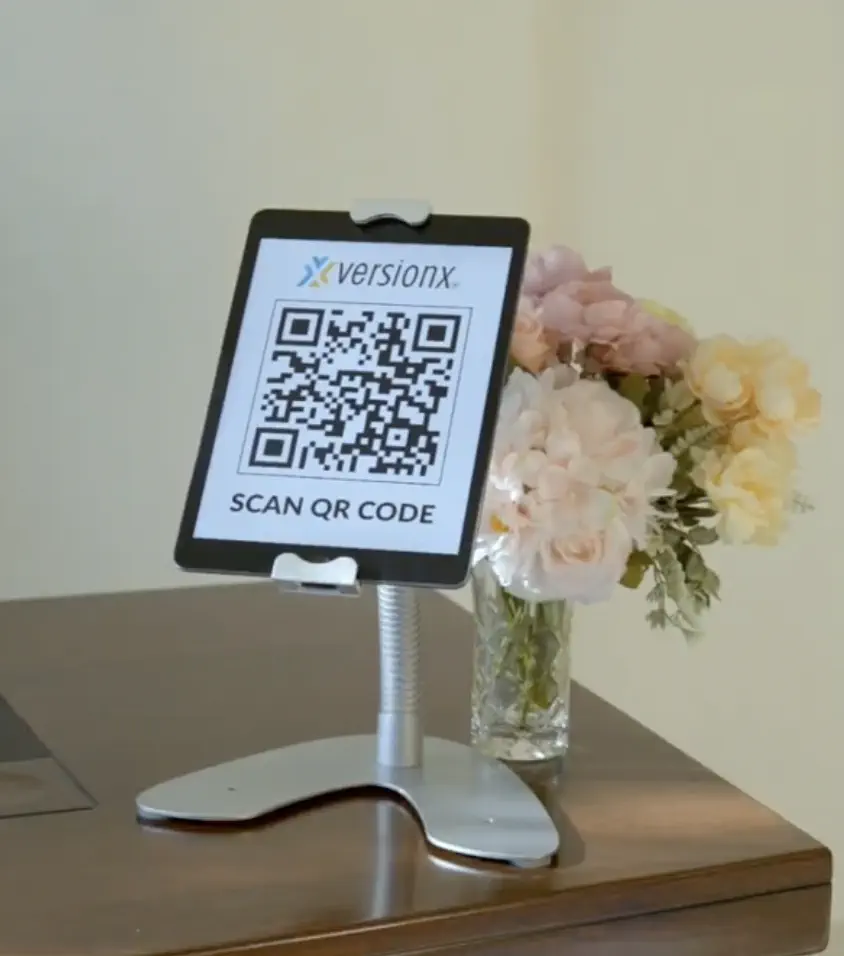
Multi-gate entry management is particularly useful for high-volume corporate events, town halls, and campuses with multiple entrances. Bulk QR invitations and synchronised gate tablets allow guests to check in at different entrances while maintaining a common visitor database, preventing queues when hundreds of visitors arrive at the same time.
To learn how we implemented it, read this case study.
4. Key Integrations That Turn a Check-In Screen into a Complete Entry System
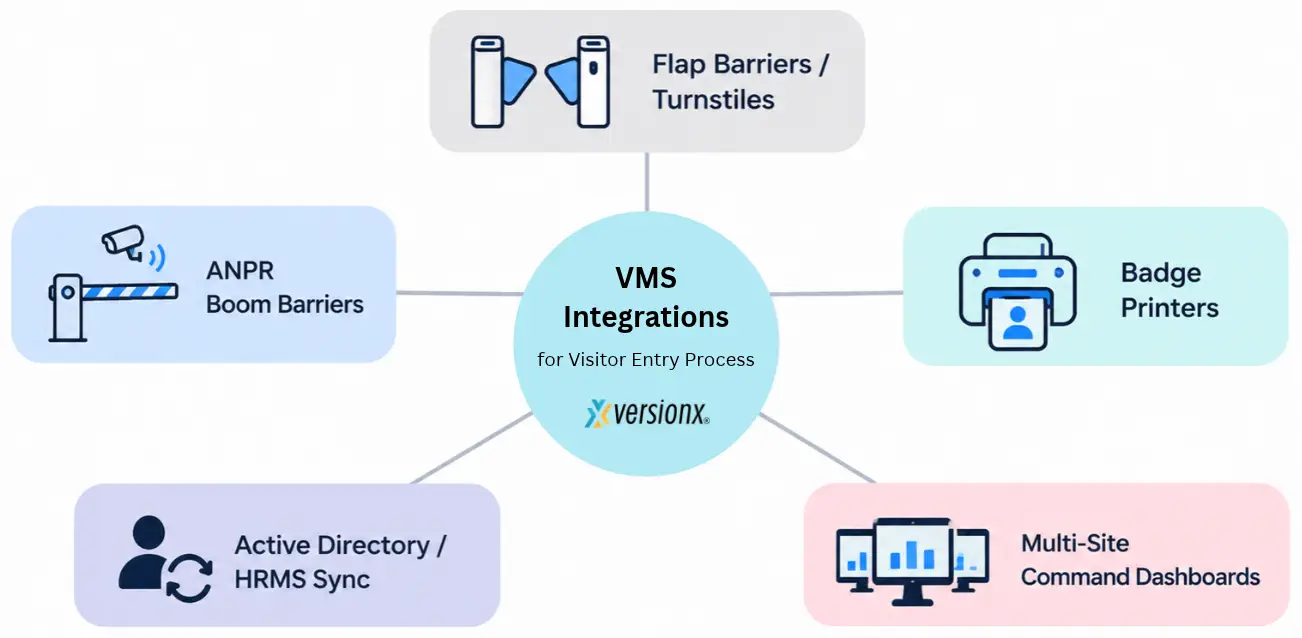
A visitor entry system becomes more effective when it connects directly with the physical security infrastructure. Integration with flap barriers, turnstiles, access control panels, ANPR boom barriers, and badge printers allows visitor approvals to trigger physical entry permissions rather than remain limited to a digital check-in record.
Watch a demonstration of VersionX VMS integrated with flap barriers in this video.
Enterprise deployments also benefit from software integrations. Active Directory and HRMS sync simplify employee and host data management, while multi-site command dashboards provide central visibility into visitor activity across offices, plants, warehouses, and campuses. These integrations reduce manual coordination and help security teams manage entry consistently across locations.
Modernize Your Visitor Entry Process with VersionX
VersionX brings visitor registration, authentication, host notifications, access credentials, parking, and security integrations together in one platform. Whether you manage a corporate office, manufacturing facility, campus, or multi-site enterprise, you can configure the entry workflow to match your operational and security requirements.
Explore the VersionX Smart Visitor Management System to see how you can automate visitor entry, reduce reception queues, and gain greater control over people entering your premises.
Our VMS is part of VersionX’s unified Physical Operations Platform.
Request a demo to see the visitor entry process in action.