







Visitor Management System in India: Smart Check-In and Compliance
A visitor management system in India must do more than digitise reception check-ins. While paper registers and lightweight check-in tools may work for low-traffic offices, Indian enterprises often deal with high visitor volumes, multiple entry gates, distributed sites, inconsistent network connectivity, and growing data-privacy expectations.
A modern VMS brings together fast visitor check-ins, physical access and compliance controls, and centralised visibility across locations. Here is what to look for when choosing the best visitor management system in India.
Recording visitor data is not new to businesses in India. Most businesses collect details of people who visit their premises. Mainly in paper registers! At best, it provides a broad idea about how many and what category of visitors they had.
The biggest challenge with physical data is that it's tough, nearly impossible, to retrieve.
Therefore, the entire process of collecting visitor data via physical methods and the data itself is rendered unhelpful, and useless at worst.
What to Look for in the Best Visitor Management System in India
A visitor management system suitable for businesses in India should handle high visitor volumes without creating queues at reception or entry gates. It must support different entry workflows across multiple gates, including main entrances, employee gates, loading bays, and security checkpoints.
Look for a system that supports QR codes, facial recognition, RFID, mobile credentials, and self-service kiosks. Visitors should be able to check in independently or through reception, depending on the facility and visitor category. This is particularly useful for high-footfall offices, factories, IT parks, and large campuses.
For organisations operating across multiple cities, campuses, or offices, the system should be able to recognise returning visitors across locations.
A centralised visitor record reduces repeated registration and gives authorised administrators a consolidated view of visitor activity. Access permissions can still vary by site.
Regional language support, mobile-based visitor passes, and flexible check-in options can make adoption easier for visitors, guards, and reception teams.
Implementation expertise and speed, responsive support, and clearly defined enterprise SLAs are equally important for large organisations with multiple locations.
Multi-tenant business parks and large campuses need more than a common reception dashboard. Each tenant, department, or business unit should be able to manage its own appointments, visitor approvals, and records while administrators retain central oversight. Access permissions should be configurable by role and location.
Read a case study to explore how VersionX visitor management system helped a multi-tenant commercial campus automate its high-volume visitor processes.
Meeting India's DPDP Act and Enterprise Audit Requirements at Reception
Client conversations increasingly highlight safety, security, and compliance as key factors in visitor management. Growing audit requirements and India's Digital Personal Data Protection (DPDP) Act, 2023, have prompted organisations to rethink how they collect, store, and manage visitor information.
Paper visitor registers expose personal information, including phone numbers, addresses, and ID details, to anyone who handles or views the register. This has increased the need for secure, digitised visitor records and controlled access to personal data.
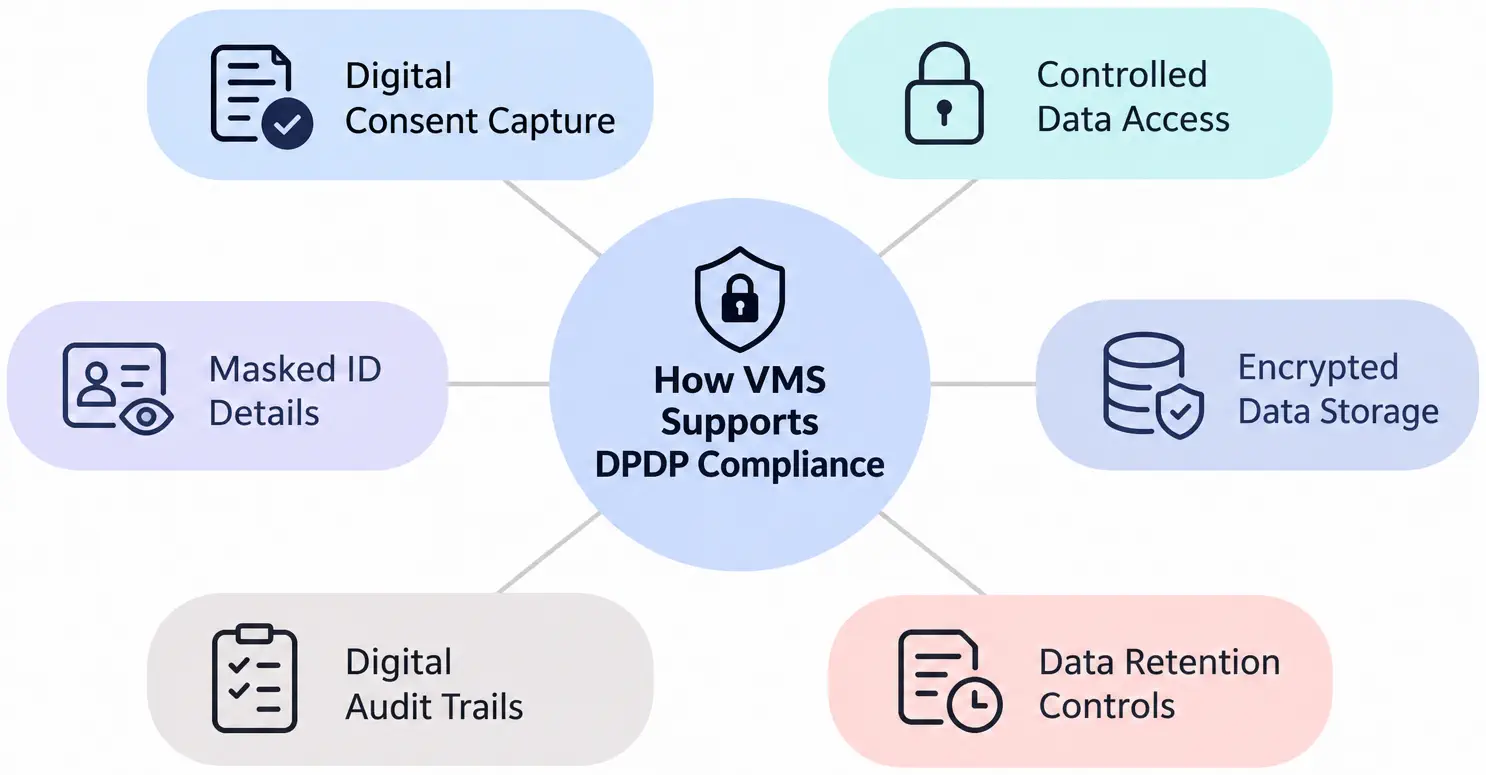
A visitor management system can replace manual records with consent-based data collection, encrypted storage, and role-based access.
ID verification should support masking of sensitive details, while visitor information should be retained only for defined purposes and periods, in line with applicable DPDP Act requirements.
Digital records, consent logs, and time-stamped audit trails also help organisations respond to internal audits and compliance reviews.
Beyond Check-In: Understanding Visitor Activity
A visitor management system turns visitor activity into useful data, helping organisations understand footfall, movement patterns, and engagement across their premises. The data captured can vary by business type and operational needs. Here are some examples:
a) Business Parks and Commercial Premises
- Track visitor and vehicle movement.
- Monitor entry and exit timings of employees, visitors, and other key personnel.
- Analyse footfall patterns and peak-hour traffic to support operational decisions.
b) Hospitals
- Maintain visit records to understand patient visits and frequency.
- Record and notify emergency arrivals to the concerned teams.
- Distinguish between OPD patients, in-patients, visitors, and other categories.
c) Schools
- Record student, parent, and staff entry and exit timings.
- Verify authorised persons collecting students.
- Maintain movement records for teaching and non-teaching staff.
d) Residential Apartments
- Track visitors and deliveries by apartment or resident.
- Record food delivery and service personnel entries.
- Monitor the movement of materials in and out of the premises.
Cloud and Offline Resilience for Indian IT Parks, Factories, and Multi-Site Campuses
Network interruptions should not bring visitor registration or gate operations to a standstill. A visitor management system should support offline check-ins, local data handling, and synchronisation when connectivity is restored.
It should also accommodate familiar communication channels such as WhatsApp and SMS for sending visitor invitations, QR codes, and entry passes.
Visitor registration should extend to actual entry authorisation.
Native integration with access control systems such as turnstiles, boom barriers, RFID readers, and ANPR systems commonly deployed across Indian facilities. This helps organisations use existing infrastructure rather than replace it.
Why Leading Indian Enterprises Choose VersionX for Visitor and Gate Automation
Large Indian enterprises need more than a digital visitor register. VersionX automates processes and combines visitor management with access control, parking, employee entry, contractor management, and material gate pass workflows on a unified Physical Operations Platform.
Learn more about how we automate visitor, parking, and access control in a unified platform.
It supports multi-gate and multi-location deployments, with native integration across access control devices, turnstiles, boom barriers, and other gate hardware.
The platform gives organisations a common system to manage people, vehicles, and entry processes across their premises, while retaining the flexibility to work with existing infrastructure.